Benefits of sandblasting and powder coating
If you drive around San Diego or any neighborhood, you can usually spot two types of metal fences. There are the ones that look pristine—deep black, smooth, and standing tall. Then, there are the ones that look tired—flaking paint, orange rust streaks running down the posts, and a finish that looks like alligator skin.
The difference isn’t usually the metal itself; it’s how that metal was prepared and finished.
At Fred’s Fencing, we don’t believe in installing a gate or fence that looks great for a month and then starts to fail. That is why we champion the industrial “gold standard” for metal protection: Sandblasting followed by Powder Coating.
It’s not just about color; it’s about engineering a shield that withstands the elements. Here is why this combination is the best investment you can make for your property.
The Problem with Traditional Paint on Fences
To understand the solution, you have to understand the failure. Traditional wet paint is dissolved in a solvent. When you spray it on a fence, the solvent evaporates, leaving a thin layer of color behind.
The issue? That layer is often brittle. Metal fences expand and contract with the heat and cold. Paint struggles to stretch, leading to microscopic cracks. Once moisture gets into those cracks, rust starts spreading underneath the paint. By the time you see the bubbles on the surface, the damage is already done.
The One-Two Punch: Sandblasting + Powder Coating
You cannot just spray a high-quality coating over dirty metal and expect it to stick. This is where the two-step process becomes non-negotiable.
1. Sandblasting: The Prep Work You Can’t Skip
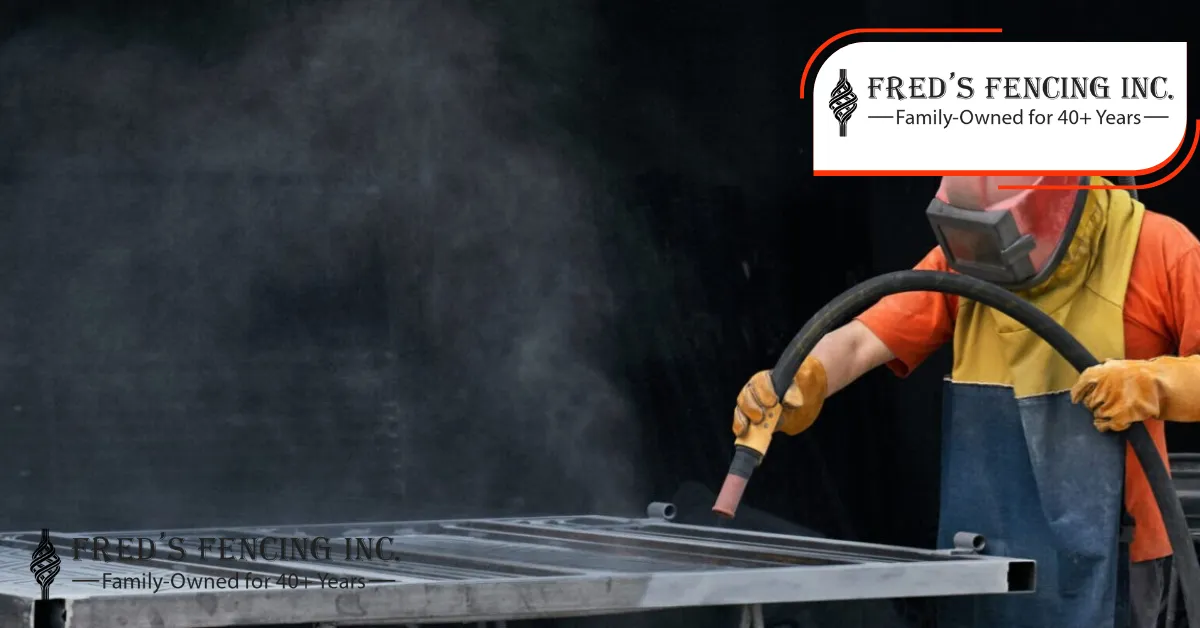
Think of sandblasting (or abrasive blasting) as a “reset button” for your metal. We blast the metal with high-velocity abrasive media. This achieves two critical things:
- Total Stripping: It removes every ounce of mill scale, old paint, rust, and oil. Even brand-new steel has oily residues from the factory that can ruin a paint job.
- The “Anchor Profile”: This is the secret weapon. Sandblasting doesn’t just clean the metal; it etches it. It creates a microscopic texture—peaks and valleys—on the surface. This mechanical “tooth” gives the new coating something to physically grip onto, preventing it from peeling off later.
Why Blasting Media Matters
Many people assume sandblasting just uses beach sand. In professional architectural fencing, that is rarely the case. To get that perfect “anchor profile,” the choice of blasting media is critical.
At Fred’s Fencing, we don’t use cheap fillers. We typically utilize angular grit (like crushed garnet or aluminum oxide) rather than round beads. Why? Because round beads just bounce off the metal, polishing it. Angular grit acts like a thousand tiny chisels, cutting into the surface to clean it deeply and create a jagged texture. That texture acts like Velcro for the powder coating, ensuring the finish grips the metal tight and never lets go.
2. Powder Coating: The Armor Your Fence Needs
Powder coating is not paint. It is a dry, free-flowing powder that is applied electrostatically. The fence is grounded, and the powder is charged, acting like a magnet that wraps around every bar, scroll, and corner.
Once coated, the fence goes into a curing oven (typically around 400°F). The powder melts and gels together, forming a continuous, cross-linked chemical skin.
5 Step Industrial Preparation Process
While other shops might simply wipe the fence with a rag and start spraying, at Fred’s Fencing, our process is strictly controlled to ensure longevity.
Step 1: Disassembly and Inspection
We don’t coat bolts and hinges while they are attached. We disassemble the gate or fence panels to ensure every nook and cranny is accessible. We then inspect for any fabrication defects that need grinding before coating.
Step 2: Chemical Degreasing
Sandblasting removes solids, but it can actually drive oil and grease deeper into the metal if they aren’t removed first. We use industrial degreasers to break down manufacturing oils and fingerprints.
Step 3: Precision Masking Not every part of the fence should be coated. Threads, hinges, and specific mounting points often need to remain bare to function correctly. We use specialized high-temperature tape (capable of withstanding 400°F+) and silicone plugs to mask off these critical areas, ensuring your gate swings smoothly after installation.
Step 4: Racking and Grounding Powder coating works on electrostatics. The fence panel is hung (racked) on a conductive chain system and grounded. This ensures the powder, which is positively charged, is magnetically attracted to the grounded fence, wrapping around corners and filling tight gaps that a spray can would miss.
Step 5: Contamination Control Between sandblasting and coating, the metal is vulnerable. We ensure a clean transfer environment. Dust, shop debris, or even moisture in the air can ruin a finish. Our workflow minimizes the time bare metal sits exposed to the air.
Can You Powder Coat Over Rust? (The Honest Truth)
This is the most common question we get. The short answer is: No, you absolutely cannot.
Some budget providers might try to sand off the loose flakes and coat over the remaining surface rust to save time. This is a recipe for disaster. Rust is essentially “metal cancer.” If you powder coat over it, you are simply trapping moisture and active oxidation underneath a hard shell.
The rust will continue to spread beneath the coating, eventually causing the powder to bubble and peel off in large sheets. This is why sandblasting is non-negotiable. It is the only method that removes rust down to the microscopic level, ensuring we are coating 100% clean, raw steel.
5 Reasons This Combo is Better for Gates & Fencing
1. Superior Coverage on Complex Designs
Wrought iron gates and ornamental fences often have intricate scrollwork, knuckles, and picket tops. A paintbrush or spray gun often misses the tight corners, leaving them vulnerable to rust. Because powder coating is applied electrostatically, the powder is naturally attracted to these hard-to-reach areas, ensuring a complete seal.
2. Impact and Chip Resistance
Your fence takes a beating. Weed eaters, flying road debris, and dog claws are constant threats. Powder coating creates a finish that is significantly harder and more flexible than standard paint. It can absorb minor impacts without chipping, keeping the metal underneath sealed and safe.
3. Serious Corrosion Resistance
Rust is the enemy of iron and steel. The thermal bonding process of powder coating creates a virtually non-porous surface. It acts as a barrier that moisture, salts, and humidity simply cannot penetrate.
4. Eco-Friendly and Safe
We care about our community. Traditional liquid paints release Volatile Organic Compounds (VOCs) into the air as they dry—these are the harsh fumes you smell. Powder coating contains no solvents and releases negligible VOCs, making it a cleaner, safer choice for your home environment.
5. A Finish That Lasts
While wet paint might need a touch-up or recoat every 2–4 years, a high-quality powder-coated fence, properly sandblasted first, can last 15–20 years or more with minimal maintenance.
Comparison: Powder Coating vs. Liquid Paint
Here is a quick breakdown of why we prefer powder coating for residential and commercial fencing:
| Feature | Liquid Paint | Powder Coating |
| Durability | Moderate. Prone to chipping and peeling. | High. Resistant to scratching, chipping, and fading. |
| Rust Protection | Low/Medium. Moisture easily penetrates cracks. | Excellent. Forms a sealed, thermal bond. |
| Coverage | Uneven. Drips and runs are common. | Uniform. No runs, drips, or sag marks. |
| Environmental | High VOCs (Solvents). | Eco-Friendly. Near-zero VOCs. |
| Maintenance | Frequent repainting required. | Low. Simple cleaning with soap/water. |
Frequently Asked Questions
Is sandblasting really necessary if my fence is new?
Yes. Even new steel has “mill scale,” a flaky surface layer that forms during manufacturing. If you coat over it, the scale will eventually pop off, taking your nice new coating with it. Sandblasting removes this to ensure a permanent bond.
Can you powder coat over rust?
No. Powder coating creates a seal, but if you seal in active rust, it will continue to eat the metal from the inside out. This is why sandblasting is critical—it removes the rust so we are coating bare, clean metal.
How do I clean my powder-coated fence?
It’s incredibly simple. Once or twice a year, wash it down with mild soapy water (like car wash soap) and a soft brush or sponge. Rinse it with a hose. That’s it. Avoid harsh chemical solvents or wire brushes.
Conclusion: Invest in Longevity
A fence is a significant investment in your property’s security and curb appeal. At Fred’s Fencing, we believe in doing it right the first time. By combining the deep cleaning of sandblasting with the durable armor of powder coating, we ensure your fence stands strong against the elements for years to come.
Ready to upgrade your home with a fence that lasts? Contact Fred’s Fencing today for a consultation.