Lower Cost Zone Zero Gates: Affordable Ember Resistant Options for Wildfire Prone Homes
When people think about wildfire protection, they usually picture defensible space far out in the yard: cleared brush, trimmed trees, and wide firebreaks. But a lot of homes that burn during wildfires are not touched by a wall of flame. They catch fire from embers, the small burning fragments that wind can carry a mile or more ahead of the fire front. Those embers land in the most vulnerable spot on the property, which is the first five feet around the house.
That ring is called Zone Zero, and the gate on the side of your house is often right in the middle of it. A wooden gate attached to your siding can act like a fuse, carrying fire from the yard straight to your walls. Replacing it doesn’t have to cost a fortune, though. This guide covers what Zone Zero is, why gates matter so much, and the most affordable non-combustible gate options you can install without blowing your budget.
What Is Zone Zero?
Fire safety experts divide the area around a home into defensible space zones:
| Zone | Distance from Home | Main Goal |
| Zone 0 (Ember-Resistant Zone) | 0–5 feet | Eliminate anything combustible that embers could ignite next to the structure |
| Zone 1 (Lean, Clean, and Green) | 5–30 feet | Remove dead plants, space out vegetation, keep plants well watered |
| Zone 2 (Reduced Fuel Zone) | 30–100 feet | Reduce fuel loads, create horizontal and vertical spacing between plants |
Zone Zero is the strictest of the three because anything burning there is almost touching the house. Common Zone Zero hazards include bark mulch, dry plants, wooden furniture, firewood stacks, trash cans, wooden fences, and wooden gates.
In California, Zone Zero was written into state law through AB 3074, which directed the Board of Forestry and Fire Protection to create ember-resistant zone rules for homes in high fire hazard areas. The exact requirements, timelines, and enforcement depend on your fire hazard severity zone and your local fire authority. Even if your area isn’t enforcing Zone Zero rules yet, the logic behind them holds: combustible materials within five feet of a home increase the risk that embers will ignite it.
Why Gates Are One of the Biggest Zone Zero Problems
Side yard gates are usually built right where a fence meets the house. That location creates several problems:
1. Direct attachment to the structure. Most side gates hang from a post fastened to the house or a fence line that ends at the house wall. If the gate ignites, flames sit inches from your siding, eaves, and windows.
2. Embers collect at gates. Wind pushes embers along fence lines and into corners. The base of a gate, where leaves and debris pile up, is a natural ember trap.
3. Wood fences act like wicks. A wooden fence running across the property can carry fire from Zone 2, through Zone 1, and straight into Zone 0. Fire investigators often describe fences as a pathway that delivers fire to the house.
4. Dry, weathered wood ignites easily. Old fence boards that have been baking in the sun for years have low moisture content and split, rough surfaces that catch embers easily.
The usual advice is simple: any fence or gate within five feet of the home should be non-combustible. Usually that means metal.
What Makes a Gate “Zone Zero Compliant”?
Rules vary by jurisdiction, but a fire-smart gate in Zone Zero generally needs to:
- Be made of non-combustible material such as steel, aluminum, galvanized metal, or masonry
- Be supported by non-combustible posts (metal posts set in concrete, not wood)
- Use a metal or masonry connection to the house, not a wooden post screwed to the siding
- Leave no wood framing, even if the visible panels are metal
- Avoid combustible add-ons like vinyl slats, bamboo screening, or reed fencing
- Keep the ground beneath it free of mulch, leaves, and dry vegetation
A metal-framed gate with wooden infill boards isn’t Zone Zero friendly. Neither is a wooden gate with a metal kickplate. The whole assembly, including the frame, posts, and infill, should be non combustible.
Lower Cost Zone Zero Gate Options
You don’t need custom ornamental iron to make your gate fire-resistant. Below are the most budget-friendly choices, roughly from least to most expensive.
1. Galvanized Chain Link Gates
Chain-link is the lowest-cost non-combustible gate. A standard 4-foot walk gate made from galvanized steel tubing and wire mesh costs little in materials and can be installed quickly.
Pros:
- Lowest upfront cost of any metal gate
- Fully non-combustible frame and mesh
- Widely available in standard sizes
- Quick installation, often the same day
- Long service life with galvanized or vinyl-coated (black or green) finishes
Cons:
- Little privacy
- Industrial look that some homeowners dislike
- Privacy slats are usually vinyl or plastic, which defeats the purpose in Zone Zero
Best for: Side yards, utility areas, pool equipment access, and anyone who wants the most affordable compliant option.
Tip: Vinyl-coated chain-link in black blends into landscaping much better than bare galvanized steel. The thin coating is bonded to steel wire, but if you want the safest result, ask your installer whether plain galvanized makes more sense for your exact location.
2. Welded Wire Panel Gates
These gates use a steel tube frame with a welded wire mesh panel, often in a 2″x4″ grid. They look cleaner and more modern than chain-link and cost only a little more.
Pros:
- Low cost
- Modern, “farmhouse” or garden-style look
- Strong and rigid
- Works well with metal-friendly climbing plants placed outside Zone Zero
Cons:
- Limited privacy
- Lighter-gauge kits can sag over time without proper bracing
Best for: Garden-style homes, modern landscapes, and homeowners who want more visual appeal than chain-link at a low price.
3. Corrugated Metal Panel Gates
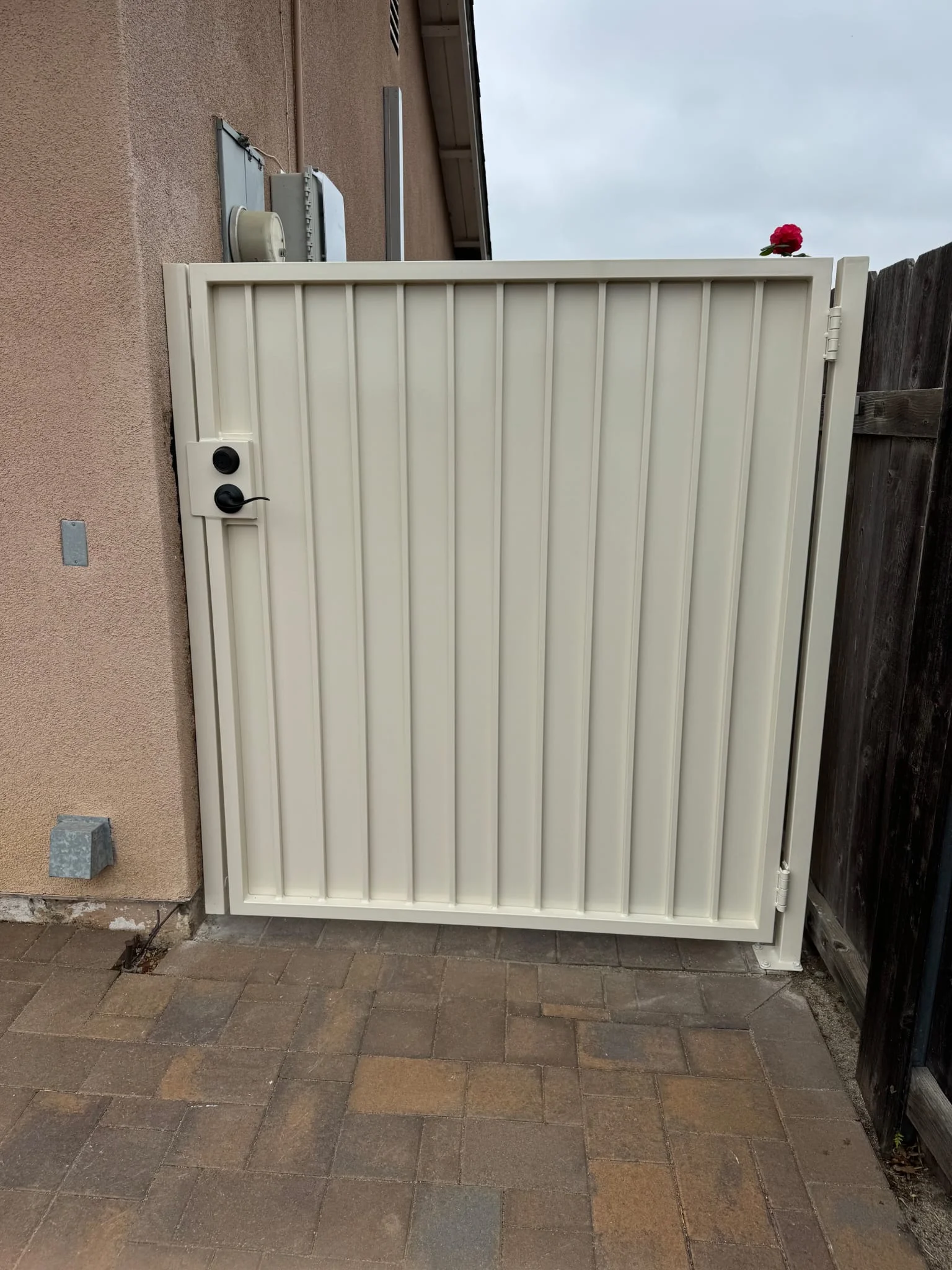
A popular budget option is a steel tube frame with corrugated galvanized or Galvalume sheet metal infill. It’s the same type of metal used on barn roofing and siding.
Pros:
- Full privacy at a reasonable cost
- Very fire resistant
- Rustic or industrial style that fits many modern landscapes
- Corten-style or painted panels are available for different looks
Cons:
- Sheet metal can heat up in direct sun
- Must be framed in metal (many DIY versions use wood frames, which defeats the purpose)
- Edges need finishing to avoid sharp corners
Best for: Homeowners who want privacy and fire resistance without paying for aluminum privacy gates.
4. Aluminum Picket Gates
Aluminum gates look like wrought iron but cost less and never rust. Pre-fabricated aluminum walk gates are widely available in standard heights and widths.
Pros:
- Non-combustible and rust-proof
- Attractive, “ornamental iron” appearance
- Lightweight, so it’s easier on hinges and posts
- Low maintenance with powder-coated finishes
Cons:
- Costs more than chain-link or welded wire
- Picket design offers little privacy
- Aluminum softens at very high temperatures, but it still won’t feed a fire the way wood does
Best for: Front yards, HOA neighborhoods, and homeowners who want curb appeal with ember resistance.
5. Aluminum or Steel Privacy Gates (Horizontal Slat Style)
Horizontal slat gates made from aluminum or steel give you the modern wood-fence look without the wood. Some products even come with a wood-grain powder coat finish.
Pros:
- Full or near-full privacy
- Modern, upscale look
- Non-combustible
- Can match existing horizontal wood fencing outside Zone Zero
Cons:
- Higher cost than the other options on this list
- Pre-made kits come in limited sizes; custom sizes add cost
Best for: Homeowners who want privacy and a premium look, and who are willing to spend a bit more.
6. Short Masonry Return Wall with a Metal Gate
Sometimes the cheapest overall fix isn’t the gate itself but the connection. A short block or stucco wall, or a metal post, can bridge the gap between the house and the gate, so nothing combustible touches the structure.
Pros:
- Creates a permanent non-combustible break between fence and house
- Gives the gate a solid, durable mounting point
- Can match your home’s stucco finish
Cons:
- Masonry adds labor cost
- Not a DIY project for most homeowners
Best for: Homes where the fence currently attaches directly to stucco or siding.
Cost Comparison: Zone Zero Gate Options
The ranges below are general estimates for a standard single walk gate (about 3–4 feet wide), installed by a professional. Actual prices depend on your region, gate size, site conditions, material prices, and whether old fencing needs to be removed.
| Gate Type | Approx. Installed Cost (Walk Gate) | Privacy | Look | Maintenance |
| Galvanized chain-link | $250 – $600 | Low | Utility | Very low |
| Vinyl-coated chain-link | $300 – $700 | Low | Utility, softer | Very low |
| Welded wire panel | $350 – $800 | Low | Garden / modern | Low |
| Corrugated metal (steel frame) | $450 – $1,100 | High | Rustic / industrial | Low |
| Aluminum picket | $500 – $1,400 | Low | Ornamental | Very low |
| Steel ornamental picket | $700 – $2,000 | Low | Classic iron | Moderate (paint touch-ups) |
| Aluminum / steel horizontal privacy | $900 – $2,500+ | High | Modern premium | Low |
Double drive gates (10–16 feet) usually cost two to three times as much as a single walk gate of the same style, and automation adds even more.
The Cheapest Fix of All: Replace Only the First Five Feet
Many homeowners assume they need to tear out their entire wooden fence to meet Zone Zero recommendations. Often, you don’t.
A smart, low-cost approach is a metal transition section:
- Keep your existing wood fence in the outer yard (Zones 1 and 2), as long as it’s in good condition.
- Remove the last five feet of wood fencing where it meets the house.
- Install a metal gate and/or a short metal fence panel in that five-foot section.
- Use metal posts, including the post where the metal section meets the wood fence.
This creates a non-combustible break so that fire traveling along the wooden fence stops before it reaches your house. Because you’re only replacing a small section, the cost stays low, often just the price of one metal gate and a panel or two.
Ways to Lower Your Zone Zero Gate Costs
Choose Standard Sizes
Pre-fabricated gates in standard widths (3, 4, and 5 feet) and heights (4, 5, and 6 feet) are far cheaper than custom builds. If your opening is close to standard, a contractor may be able to adjust the opening instead of custom-fabricating the gate.
Reuse Existing Concrete Footings Where Possible
If your current posts sit in sound concrete, an installer may be able to set new metal posts nearby or use post sleeves, which reduces digging and concrete costs.
Combine Projects
If several neighbors along a shared fence line are upgrading, ask a fence company about group pricing. Contractors save on travel, setup, and materials when they handle multiple homes on the same street.
Pick Function Over Decoration
Decorative finials, scrolls, and arched tops add cost without adding fire resistance. A flat-top design does the same safety job for less.
Check for Grants and Incentives
Some fire safe councils, local fire districts, utilities, and state programs offer grants, rebates, or cost-share programs for home hardening and defensible space work. Programs come and go, so check with your local fire department or fire safe council before you buy.
Get Multiple Quotes
Prices for the same metal gate can vary widely between companies. Ask each contractor to spell out the material, gauge, post type, and whether removal and haul-away of the old gate are included.
DIY vs. Professional Installation
DIY can work if:
- You’re installing a pre-hung chain-link or aluminum gate kit
- Posts are already set and sound
- The ground is level
- You’re comfortable with post-hole digging, concrete, and leveling
Hire a professional if:
- The gate attaches to the house, stucco, or masonry
- You need welding (corrugated panel gates, custom steel frames)
- The site is sloped
- You want a double drive gate
- You need the job to meet a specific inspection or HOA requirement
A sagging, poorly hung gate isn’t just annoying. If it can’t close or latch properly, it may also fail during an evacuation, when you need quick, reliable access to your side yard.
Don’t Forget the Hardware
A fire-smart gate needs fire-smart hardware:
- Hinges: Steel or stainless steel, rated for the gate’s weight
- Latches: Metal gravity latches or lockable metal latches; avoid plastic components
- Self-closing hinges: Useful for pool areas and required by many pool safety codes
- Gate stops and drop rods: Metal for double gates
Keep in mind that firefighters may need to get into your side yard quickly. Avoid complicated locking setups that slow down access, and consider a latch that can be opened from both sides.
Zone Zero Maintenance Around Your Gate
A metal gate won’t help much if the area around it is full of fuel. Once your new gate is in, maintain it:
- Clear debris from the base of the gate and fence line regularly, especially leaves and pine needles
- Replace bark mulch within five feet of the house with gravel, decomposed granite, pavers, or concrete
- Remove dry plants and climbing vines from the gate and nearby walls
- Store trash bins elsewhere, since plastic bins next to a gate can melt and burn
- Move firewood, lumber, and patio cushions out of Zone Zero, especially during fire season
- Inspect hinges and latches once a year and lubricate as needed
Frequently Asked Questions
Do I need to replace my whole wooden fence for Zone Zero?
Not necessarily. Zone Zero focuses on the first five feet around the home. Replacing the gate and fence sections within that distance with metal, and creating a non-combustible break where wood meets metal, is often enough. Check with your local fire authority for your area’s specific requirements.
What is the cheapest Zone Zero gate?
A galvanized chain-link walk gate is usually the lowest-cost non-combustible option. Welded wire panel gates are a close second and look more polished.
Can I put privacy slats on a chain-link gate in Zone Zero?
Most privacy slats are vinyl or plastic, which are combustible. If privacy matters, a corrugated metal or aluminum privacy gate is a safer choice.
Is aluminum fire resistant?
Aluminum is non-combustible, meaning it won’t burn or feed a fire. It loses strength at very high temperatures, but it doesn’t add fuel the way wood or vinyl does, which is what matters most in Zone Zero.
Is vinyl fencing allowed in Zone Zero?
Vinyl (PVC) is not considered non-combustible. It can melt, deform, and burn when exposed to embers and heat, so it’s generally not recommended within five feet of a home.
What about composite or “fire-rated” wood gates?
Fire-retardant-treated wood and composite products can resist ignition better than untreated wood, but they’re generally still combustible. For Zone Zero, metal or masonry is the safest choice.
Does my metal gate need metal posts?
Yes. A metal gate hung on wooden posts still leaves combustible material inside the ember-resistant zone. Use steel or aluminum posts set in concrete.
How long does a metal gate last?
Galvanized steel and powder-coated aluminum gates often last 20 years or more with minimal maintenance, far longer than most wooden gates.
Final Thoughts
Your side gate may be one of the smallest parts of your property, but in a wildfire it can be one of the most important. A wooden gate attached to your house gives embers and flames a direct route to your walls. The good news is that fixing it is one of the most affordable home hardening upgrades you can make.
Whether you go with a basic galvanized chain-link gate, a clean welded wire panel, a private corrugated metal design, or a polished aluminum gate, the goal is the same: keep everything within five feet of your home non-combustible. Start with the gate, swap the last few feet of fencing for metal, clear the ground underneath, and you’ll have greatly reduced one of your home’s biggest ember entry points for a reasonable price.